
The Backstories of the Victims
And Then There Were NoneExplores the past crimes that brought each of the ten characters to Indian Island, revealing the justice that U.N. Owen sought to deliver.
increasing Bearing strength in each event
 decreasing
Bearing strength in each eventdecreasingThe Guilt of the Ten
A Roster of Sinners
The Unpunished Crimes
Each of the ten people on Indian Island had committed a murder that the law could not touch. Lawrence John Wargrave had manipulated a jury to convict an innocent man, Edward Seton, and sent him to the gallows. Vera Elizabeth Claythorne had deliberately allowed her charge, Cyril Ogilvie Hamilton, to drown so that her lover Hugo Hamilton would inherit his fortune. Philip Lombard had abandoned twenty-one men in the African bush to save himself. Emily Caroline Brent had driven her pregnant servant, Beatrice Taylor, to suicide. John Gordon Macarthur had sent his wife's lover, Arthur Richmond, to his death in battle. Edward George Armstrong had operated on a patient while drunk, causing her death. Anthony James Marston had killed two children in a hit-and-run accident. William Henry Blore had committed perjury to convict an innocent man, James Stephen Landor. Thomas Rogers and Ethel Rogers had withheld medication from their elderly employer, Jennifer Brady, causing her death. All were guilty, but all were free.
The Collector of Victims
Lawrence John Wargrave, the judge, learned of these crimes through his network of acquaintances and his own investigations. He decided to become the executioner that the law could not be. He selected his ten victims, and with the help of Isaac Morris, he set the trap on Indian Island. The backstories of the victims are the foundation of the entire plot.
The Judge's Hidden Agenda
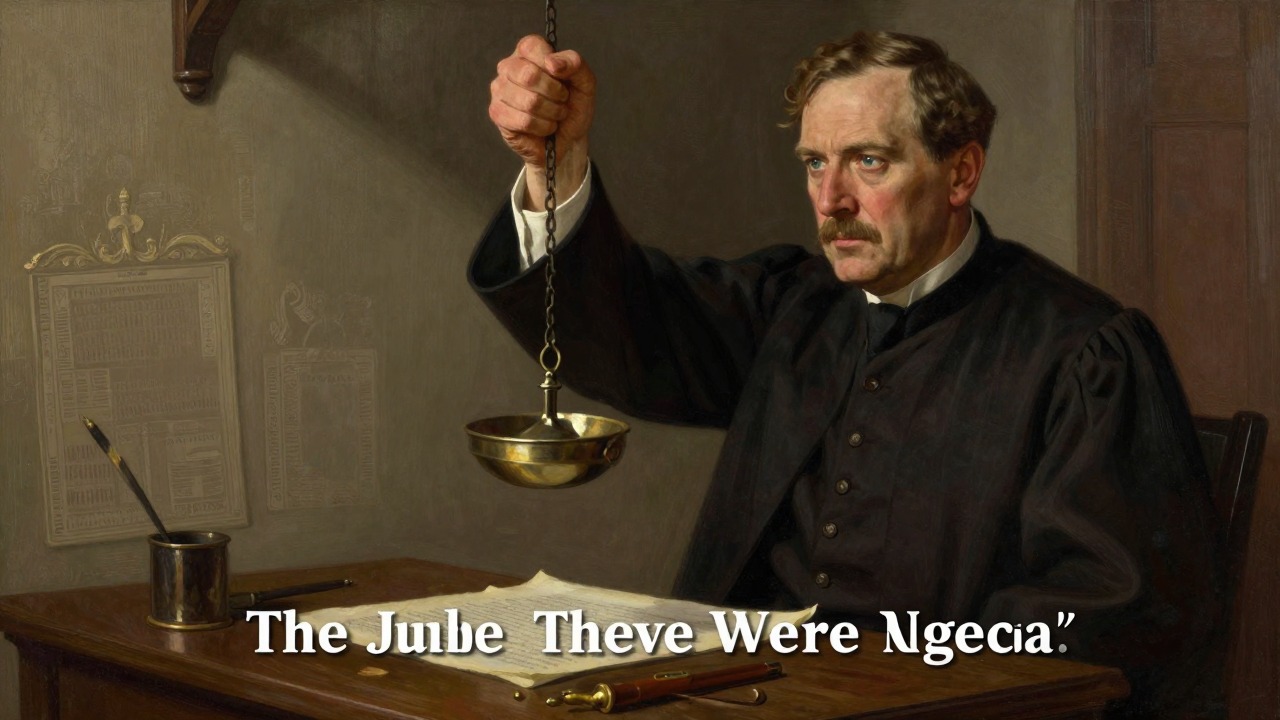
Lawrence Wargrave: The Executioner
A Lifetime of Judging
Lawrence John Wargrave had been a hanging judge, renowned for his harsh sentences. He enjoyed the power of life and death. But he wanted more. He wanted to be the hand that struck the blow, not just the voice that pronounced the sentence. His own terminal illness gave him the impetus to act. He planned the perfect crime: ten murders that would appear to be the work of a madman, with himself as the final victim, apparently killed by the last survivor.
The Mastermind
Wargrave's confession, written in a bottle, reveals his meticulous planning. He researched each victim, wrote the letters, arranged the island purchase through Isaac Morris, and even faked his own death. He was the only one who could move freely after he was "dead." He killed Rogers, Emily Brent, and Dr. Armstrong. He also set the trap for Blore and Vera. His final act was to stage his own suicide, making it look like a murder. The ultimate irony: the judge who had condemned others became the greatest criminal of all.
The Role of Isaac Morris
The Middleman's Fate
The Shady Lawyer
Isaac Morris was a corrupt lawyer and drug dealer who handled the financial arrangements for Indian Island. He bought the island on behalf of U.N. Owen, hired the servants, and sent the invitations. He was the only person who knew the identity of the buyer—Lawrence John Wargrave. But Morris was also a victim. Wargrave gave him a capsule to take for indigestion, which was actually a lethal dose of sleeping pills. Morris died in his sleep on the night of August 8th, before the guests even arrived.
The Disappearance of the Accomplice
Morris' death removed the only link to Wargrave. The police investigation later found Morris dead, but could not determine if it was suicide or accident. His death was the first of the ten, but it was not discovered until after the island massacre. Wargrave had ensured that his accomplice would not talk.
The Disappearance of Dr. Armstrong
The False Lead
The Doctor's Gullibility
Dr. Edward George Armstrong was a respected but naive man. He believed Lawrence John Wargrave's story about trapping the murderer. The two staged Wargrave's fake death, and then Armstrong agreed to meet him outside at night. Wargrave led him to the cliff and pushed him into the sea. Armstrong's disappearance created a mystery: he was gone, but how? The remaining three guests—Vera, Philip, and Blore—could not find him. They suspected each other of his murder.
The Red Herring's Meaning
The nursery rhyme said "A red herring swallowed one." Armstrong was the red herring. His death was a diversion that allowed Wargrave to continue his work. The guests were so focused on finding Armstrong that they did not suspect the supposedly dead judge. The disappearance was a masterstroke of misdirection.
The Police Investigation Epilogue
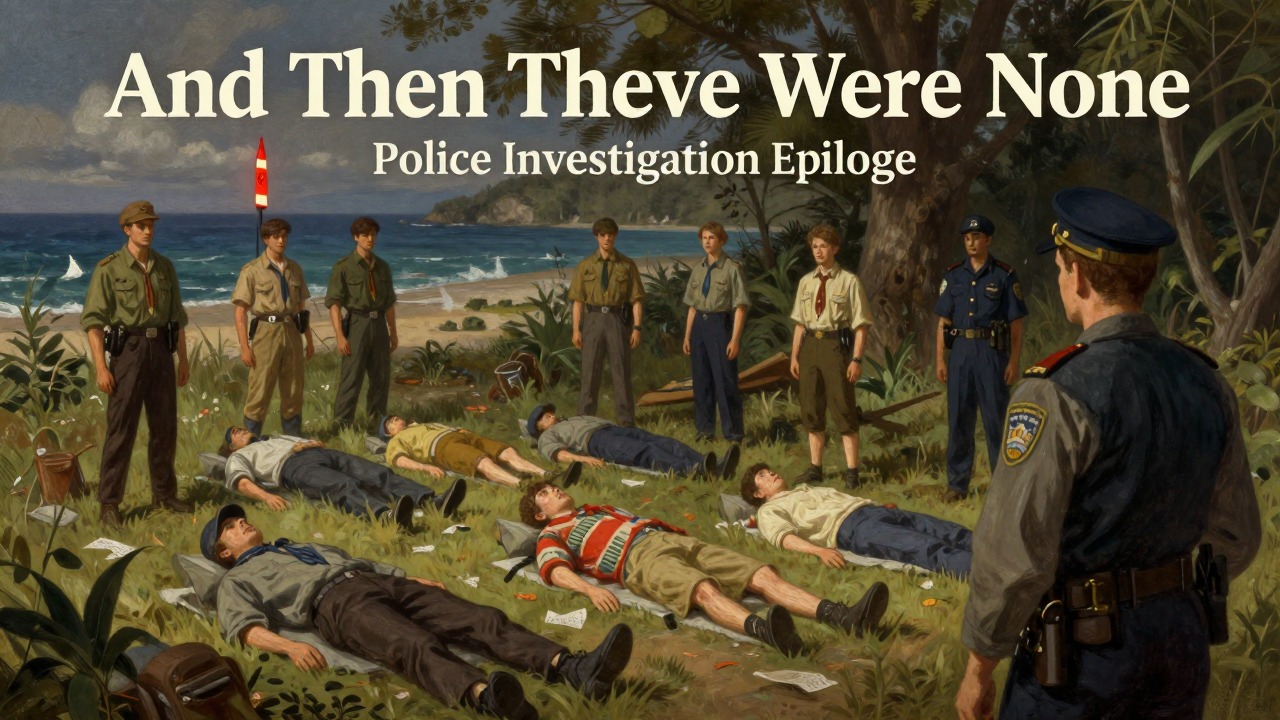
The Unsolved Mystery
The Discovery
On August 12th, a party of boy scouts saw S.O.S. signals from the island. The next day, Fred Narracott and other men landed on Indian Island. They found ten dead bodies, each in a different location. No living soul was on the island. The police were baffled. The deaths matched the nursery rhyme, but who had killed them? The evidence pointed to a suicide pact, but the details did not add up.
The Investigation
Scotland Yard's Assistant Commissioner Sir Thomas Legge and Inspector Maine investigated. They interviewed the locals, examined the records, and found the accusations were true—each victim had committed a murder. But they could not determine who the killer was. The revolver had Vera's fingerprints, but she was dead. The case seemed insoluble. Then, a fishing trawler found a bottle containing Lawrence John Wargrave's confession. The mystery was solved, but too late. The ten were dead, and the judge had had his final triumph.
before the events of the novel
his entire life, culminating on the island
August 8th, before the guests arrived
night of August 10th
after August 12th
